
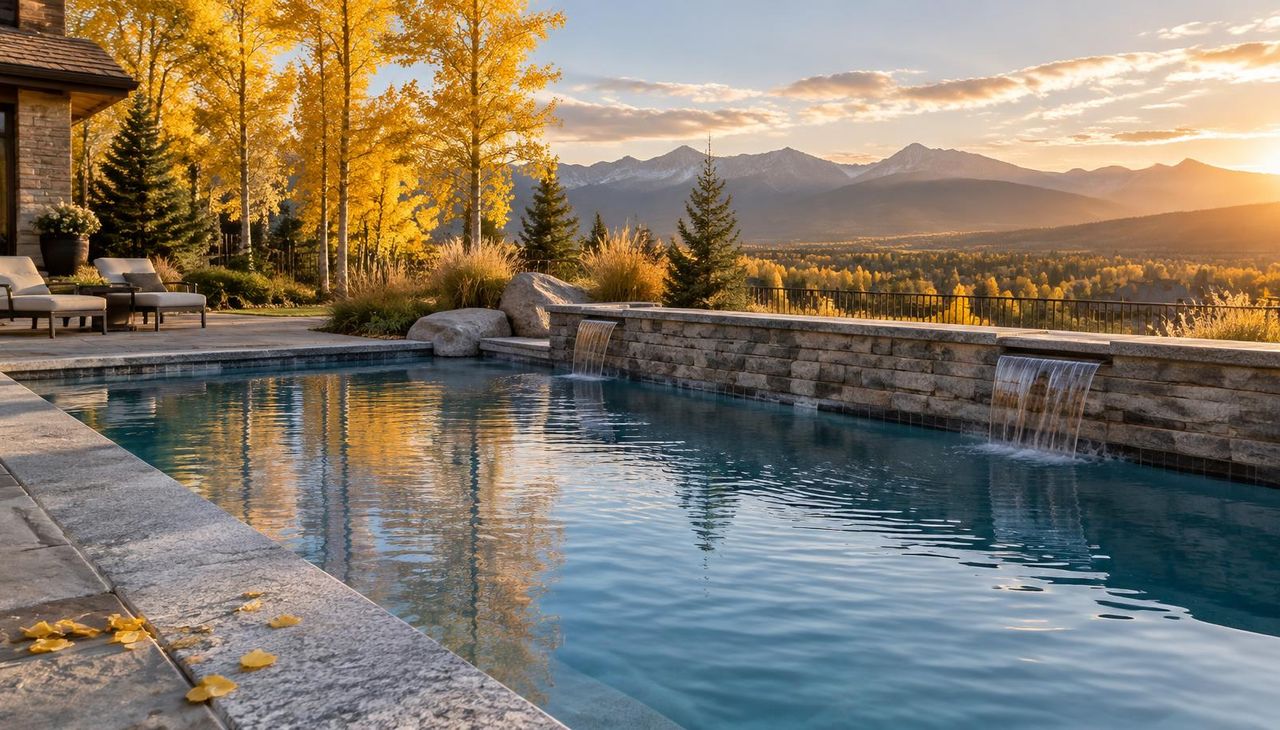
Pool coping is the cap that runs around the edge of the pool. It is the stone you sit on, walk on, and see every time you look outside. In Colorado, it also has to survive hard winters, strong sun, and pool water. That makes the stone choice and the install details more important here than in milder climates.
Our guide to choosing natural stone for Colorado homes covers freeze-thaw basics. This post applies them to pools, coping, and stone pool walls.
What do pool coping and stone pool walls actually do?
Coping caps the top edge of the pool shell. It gives a finished edge, a safe place to grab and sit, and directs splash water away from the pool. Stone pool walls, such as raised spillover walls or retaining walls, add structure and style. Both protect what is underneath while setting the look of the whole backyard.
Good coping also ties the pool to the patio. When the coping stone and the deck or wall stone work together, the pool looks like part of the house, not an add-on.
Which natural stones handle Colorado freeze-thaw and pool chemicals?
Dense, low-porosity stones do best. Granite and quartzite are the most forgiving because they absorb little water and stand up to chlorine and salt. Some limestones work well when chosen carefully. Travertine is popular and comfortable underfoot but needs good sealing. Ask for the specific stone's test data rather than relying on general claims.
- Granite: very durable, wide color range, can be flamed or leathered for grip.
- Quartzite: hard and dense with a natural look. Check the specific slab, since quality varies.
- Limestone: soft, elegant look. Pick denser varieties rated for exterior use.
- Travertine: stays cooler in sun. Filled or sealed travertine is a better fit for our winters.
Whatever the stone, ask your supplier whether it is rated for exterior use in a freeze-thaw climate and around pool water.
Which edge profile should you choose for pool coping?
The edge profile is the shape of the coping where it meets the water. Bullnose edges are rounded and comfortable to sit on. Square or eased edges look clean and modern. Rock-face or chiseled edges suit rustic designs. Pick based on how you use the pool, then think about grip and comfort.
For families with kids, a rounded edge and a textured top finish are usually the most comfortable. For a sleek modern yard, a thick square edge with a honed or flamed top reads crisp and calm. We can show samples so you can feel the difference.
Why do drainage and expansion joints matter so much?
Water and movement cause most coping failures. The coping and deck need to slope away from the pool so water does not sit on the stone or run behind it. Expansion joints let the pool shell and the deck move separately as temperatures swing. Without them, stone can crack or pop loose over a few winters.
A solid install also uses the right setting bed and mortar for exterior wet areas, and a flexible sealant in the joint between coping and deck. These are small details you will not notice once it is done, and they are what keep it looking good.
When is the best time to plan pool coping work in Colorado?
Fall is a smart time to plan. By mid-September, many Colorado pools are closing for the season. That gives time to choose stone, measure, and schedule before the ground freezes, or to line up the work for early spring so the pool is ready when warm weather returns. Ask about timing for your specific project.
Planning now also means you are not competing with everyone else who starts thinking about the pool in May.
What should you ask before you pick a coping stone?
Before you commit, ask a few direct questions. The answers tell you whether a stone fits your pool, your climate, and how you use the space. A good installer will answer them plainly and put the plan in writing with your quote.
- Is this stone rated for exterior use in a freeze-thaw climate?
- How does it handle chlorine or salt water?
- Does it need sealing, and how often?
- How hot does the surface get in direct sun?
- What top finish gives good grip when wet?
- Which edge profile do you recommend for how we use the pool?
- How will drainage and expansion joints be handled?
- Does the coping stone work with our deck and any stone pool walls?
- Can I see a full piece, not just a small sample?
How does pool stone fit with the rest of your backyard?
Coping and pool walls are part of a bigger outdoor plan. Matching or complementing the stone with a patio fireplace, seat walls, or an outdoor kitchen makes the backyard feel finished. Many clients use the same stone family inside and out.
See which outdoor features hold their value in outdoor living spaces that actually add value, and how a fireplace can carry the same stone indoors in our stone fireplace mantle installation guide. Our outdoor living stone work covers patios, seat walls, and more.
Ready to plan your pool coping?
We work on pools across Parker, Castle Pines, Highlands Ranch, Littleton, and nearby. We will look at your pool, talk through stone options, and give you a written quote that covers drainage and joints, not just the stone.
Frequently asked questions
What is the best natural stone for pool coping in Colorado?
Dense stones like granite and quartzite are the most forgiving. Select limestones and sealed travertine also work. Confirm the specific stone is rated for exterior freeze-thaw use.
Is travertine good for pool coping in Colorado?
It can be, especially filled or well-sealed travertine. It stays cooler underfoot, but it needs sealing and good drainage to handle our winters.
Does salt water damage natural stone coping?
Salt can be hard on porous stones. Dense stones and proper sealing help a lot. Ask your supplier how the specific stone performs around salt pools.
Can coping be replaced without redoing the whole pool?
Often yes. Coping can usually be removed and replaced on its own, though we check the bond beam and tile line first.
Why is my existing coping cracking?
Common causes are water getting under the stone, missing expansion joints, or a stone that is too porous for freeze-thaw. We can assess it and recommend a fix.
When should I schedule pool coping work?
Plan in fall after closing the pool. Then the work can happen before the ground freezes or early in spring, depending on your project.
Do you build stone pool walls too?
Yes. We build stacked stone and granite pool walls, spillover walls, and retaining walls that tie into the coping.