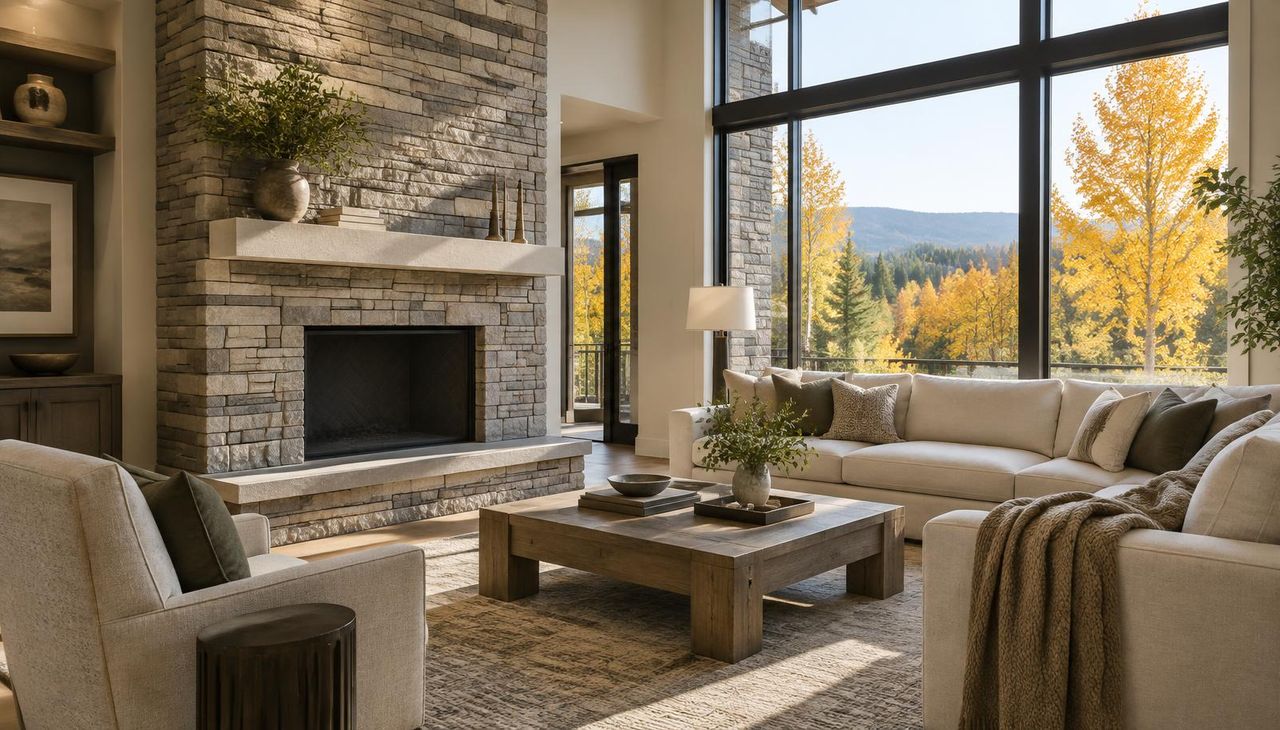
The fireplace is often the one wall everyone looks at. A stone mantle and surround can make it the best wall in the house. It can also go wrong if the stone, the support, or the clearances are not right. This guide walks through the choices we talk about with homeowners across Highlands Ranch, Castle Pines, and the rest of the south metro.
If you are still deciding between stone types for your home in general, start with our guide to choosing natural stone for Colorado homes. This post goes deeper on the fireplace itself.
Which stone works best for a fireplace mantle and surround?
Granite and quartzite are the safest picks for most fireplace surrounds because they are dense, hard, and handle heat well. Limestone and marble give a softer, classic look and work well with care. Ledgestone veneer is the go-to for full-height textured walls. The right choice depends on your fireplace type and the look you want.
Here is how the common options compare. Treat this as a starting point, then look at real slabs and samples in person.
| Material | Look | Heat and durability notes | Upkeep |
|---|---|---|---|
| Granite | Speckled to bold movement, polished, honed, or leathered | Dense and hard. Handles heat well. A strong choice near the firebox. | Low. Seal as recommended for the specific stone. |
| Quartzite | Marble-like veining with more toughness | Very hard and heat tolerant. Good for thick mitered mantles. | Low to moderate. Seal as recommended. |
| Limestone | Soft, warm, quiet, often honed | Softer and more porous. Works well for mantles with good detailing. | Moderate. Can stain from soot or spills, so seal it. |
| Marble | Classic veining, bright or dramatic | Softer than granite. Fine for many surrounds. Can etch and discolor near heavy heat. | Moderate to higher. Seal and clean gently. |
| Ledgestone veneer | Stacked, textured, rustic to modern | Natural thin stone set on a prepared wall. Popular for floor-to-ceiling walls. | Low. Dust the ledges now and then. |
Many of our favorite fireplaces mix two materials. A textured ledgestone wall with a thick honed limestone or quartzite mantle shelf is a look that fits a lot of Colorado homes.
What should you know about heat and clearances?
Clearances are not a design choice. Your fireplace or insert manufacturer sets the required distances to combustible and noncombustible materials, and local building code adds its own rules. Your installer should read the manual for your exact unit and confirm local requirements before cutting any stone. Never guess on clearances.
A few practical points we see often:
- Gas, wood burning, and electric units all have different requirements. Have the model number ready.
- Mantle height and depth both matter. A deeper shelf may need to sit higher.
- Stone is noncombustible, but the wall behind it and the support system still need to meet the manual and code.
- If you are replacing an old surround, the firebox may need inspection before new stone goes on.
When in doubt, we will check with the manufacturer or your local building department first.
What happens during the templating and install visits?
Templating is the measuring visit. We confirm the fireplace opening, the wall, clearances, and the mantle size, then make a precise template for the fabricated pieces. Install comes later, once the stone is cut. You will know the plan, the pieces, and the support method before anything goes on the wall.
At templating, expect us to look at:
- The wall structure and whether it can carry the weight of the stone and mantle.
- How the mantle will be supported, such as hidden steel brackets or a built-up stone base.
- Edge profile, thickness, and how corners and seams will look.
- Outlets, TV mounts, or wiring that need to move.
On install day, the area gets protected, the wall is prepared, and the pieces are set and leveled. The total schedule depends on the stone, the size of the wall, and fabrication, so ask for a written timeline with your quote.
When is the best time to install a stone fireplace mantle in Colorado?
Late summer and early fall are the best time to plan. In September, most homeowners are not using the fireplace yet, so there is room to template, fabricate, and install before the cold nights arrive. Waiting until the first snow often means living with a torn-up wall during the season you want it most.
If you start now, you can visit a slab yard, pick your stone, and get on the schedule while the weather is still mild. That also gives time to sort out any firebox or gas work that needs to happen first.
How does a fireplace fit with the rest of your stone projects?
A fireplace often sets the tone for the rest of the house. If you are also planning new counters or outdoor stone, choosing materials together keeps the home consistent. Many homeowners match a mantle to a kitchen island or carry the same ledgestone outside to a patio fireplace.
For ideas, see what clients are choosing in our 2026 kitchen countertop trends, and how a stone fireplace can anchor a patio in outdoor living spaces that actually add value.
Ready to plan your fireplace?
The best next step is a short conversation and a look at your wall. We will talk through stone options, check what your fireplace manual requires, and give you a written quote. Most of our fireplace work is in Highlands Ranch, Parker, Littleton, Centennial, and nearby.
Plan your fireplace mantle with our team, or request a quote and send a few photos of the space.
Frequently asked questions
Can a heavy stone mantle go on any wall?
Not always. The wall and support need to carry the weight. We check the structure at templating and plan hidden brackets or a stone base as needed.
Is granite or quartzite better for a fireplace?
Both handle heat well. Granite offers more color range and patterns. Quartzite gives a marble-like look with strong durability. Choose by look, then confirm it suits your unit.
Can I use marble around a gas fireplace?
Often yes, as long as the clearances in your manufacturer's manual and local code are met. Marble can discolor near high heat, so placement and detailing matter.
Do I need to seal a stone fireplace surround?
Most natural stones benefit from sealing, especially limestone and marble. Sealing helps with soot and spills. We will tell you what your specific stone needs.
Can you put new stone over an existing brick fireplace?
In many cases, yes. It depends on the condition of the brick and the fireplace requirements. We assess it at the first visit.
How long does a fireplace mantle installation take?
It depends on the stone, the wall size, and fabrication. Ask for a written timeline with your quote so you know what to expect.